Bánh Xèo – Crispy, Savory Vietnamese Sizzling Crêpes
Bánh Xèo – Crispy, Savory Vietnamese Sizzling Crêpes
Few dishes announce their arrival quite like bánh xèo. The moment the batter hits a hot pan, it lets out a loud, satisfying sizzle—a sound that promises crisp edges, rich aroma, and a meal meant to be shared.
These iconic Vietnamese crêpes are thin, golden, and shatteringly crisp on the outside, while the inside bursts with savory fillings like pork, shrimp, mung beans, onions, and bean sprouts.
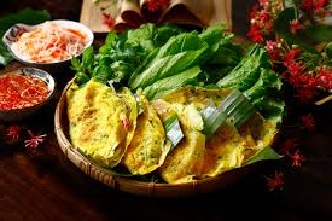
Bánh xèo is not just food; it’s an experience. It’s cooked hot off the pan, eaten with your hands, wrapped in fresh greens, and dipped into a bold, tangy sauce. Whether you call them Vietnamese pancakes or Vietnamese crêpes, one thing is certain: bánh xèo is comfort food with personality.
What Is Bánh Xèo?
The name bánh xèo literally translates to “sizzling cake.” The word xèo is an onomatopoeia that mimics the sound the batter makes when it hits hot oil. Vietnamese cuisine is full of playful, descriptive names like this, and bánh xèo is a perfect example of how food and language intertwine.
Despite often being mistaken for an egg dish, traditional bánh xèo contains no eggs at all. Its bright yellow color comes from turmeric powder, not yolks. The texture may resemble an omelette at first glance, but one bite reveals something entirely different—light, crisp, and deeply savory.
A Dish Made for Sharing
Bánh xèo is designed to be cooked and eaten communally. The batter, fillings, herbs, and vegetables are simple on their own, but they don’t make sense in tiny quantities. You don’t buy a few shrimp, a handful of bean sprouts, or a quarter head of lettuce. Instead, you prepare everything together, lay it out on the table, and cook crêpe after crêpe while everyone eats.
Once the prep is done, the cooking becomes fast and rhythmic. As soon as one bánh xèo leaves the pan, another goes in. It’s perfect for family-style dinners, casual gatherings, or weekend meals where everyone lingers at the table.
Where Bánh Xèo Comes From
There are two main regional styles of bánh xèo in Vietnam. Central Vietnamese bánh xèo is smaller and often wrapped in rice paper before eating. The version most people outside Vietnam recognize—the large, fold-over crêpe wrapped in lettuce—originated in southern Vietnam.
This southern style is especially popular for its dramatic size, crispness, and abundance of fresh herbs and greens.
Why Use Both Rice Flour and Wheat Flour
Traditionally, bánh xèo was made entirely with rice flour. While that method still works, using a combination of rice flour and all-purpose (wheat) flour produces consistently better results for home cooks.
Here’s why wheat flour helps:
-
It creates a more complex, satisfying crispness
-
It helps the crêpe brown beautifully in the pan
-
It improves texture if the batter is made ahead of time
If you want a fully traditional approach, you can replace the wheat flour with rice flour entirely—but expect a slightly different texture.
How to Get Perfectly Crispy Bánh Xèo
The most common issue people face is a crêpe that turns soft instead of crisp. Here’s how to avoid that:
-
Measure flour by weight, not volume, to prevent overly thick batter
-
The batter should be thin and fluid, not like American pancake batter
-
Let steam escape by uncovering the pan during the final cooking stage
-
Don’t be afraid of oil—it’s essential for crisp edges
-
Avoid too much coconut cream, which can soften the texture
-
If needed, swap regular water for carbonated water for extra lightness
-
Use a pan that retains heat well, such as cast iron or carbon steel
How to Eat Bánh Xèo
Bánh xèo is meant to be eaten with your hands, never with a fork and knife.
-
Break off a small piece of the crêpe
-
Wrap it in lettuce or mustard greens
-
Add fresh herbs like mint, cilantro, and Vietnamese perilla
-
Spoon over nước chấm, the classic Vietnamese dipping sauce
Each bite should be balanced—crispy, fresh, savory, and tangy.
Batter Storage and Make-Ahead Tips
The batter can be stored in an airtight container in the refrigerator for 4–6 days. If you plan to use it over several days, avoid contaminating the main container with used utensils. Pour out what you need into a separate bowl before cooking.
For best results, bánh xèo should always be cooked fresh. While leftovers can be refrigerated and reheated in the oven, they’ll never match the crispness of a freshly cooked crêpe.
Ingredients
Batter
-
255 g rice flour
-
85 g all-purpose flour
-
2–3 teaspoons turmeric
-
3½ cups filtered water
-
14 fl oz coconut cream (or coconut milk)
-
1 teaspoon salt
-
1 sprig green onions, chopped
Filling
-
½ cup dried mung beans
-
1½ lb pork belly
-
1 lb shrimp (45/50 or 60/70 size)
-
1 medium yellow onion, thinly sliced
-
1½ lb bean sprouts
Vegetables & Herbs
-
Mustard greens
-
Mint
-
Cilantro
-
Vietnamese perilla (optional)
How to Make Bánh Xèo
-
Mix all batter ingredients except green onions and rest for at least 3 hours or overnight
-
Steam or soak mung beans until soft
-
Boil pork belly until tender, then slice thinly
-
Clean and prep shrimp, vegetables, and herbs
-
Heat oil in a pan, sauté onion, pork, and shrimp
-
Pour in batter and swirl to coat the pan thinly
-
Add mung beans and bean sprouts, cover briefly
-
Uncover and cook until deeply crisp
-
Fold, serve immediately, and repeat
Each crêpe takes about 8–10 minutes from start to finish.
Bánh is one of those rare dishes that turns cooking into a shared celebration. It’s affordable, interactive, and endlessly satisfying. With just a little preparation and patience, you can recreate this Vietnamese classic at home—crispy, sizzling, and unforgettable.
If you’ve never tried bánh xèo before, this is your sign. Once you hear that sizzle, you’ll understand why this dish has captured hearts for generations