How to Store Cooked Rice Safely at Home
How to Store Cooked Rice Safely at Home and Reduce Food Waste
Rice is a favourite in many Nigerian homes. Whether you prepare jollof rice, white rice, fried rice or coconut rice, it is easy to cook more than your family can finish in one sitting.
Instead of throwing away the extra food, you can save it for another meal. However, cooked rice needs careful handling because harmful bacteria can grow when it is left at unsafe temperatures.
Learning how to store cooked rice properly can help protect your family, save money and reduce unnecessary food waste.
1. Refrigerate Cooked Rice Promptly
One common mistake is leaving a pot of rice on the kitchen counter for several hours after cooking.
Cooked rice may contain spores of a bacterium called Bacillus cereus. These spores can survive cooking and grow if the rice is held at unsafe temperatures.
Refrigerate cooked rice within two hours of cooking, or within one hour when the surrounding temperature is above 32°C.
In a hot kitchen, avoid leaving rice on the counter while waiting for everyone to finish eating.
2. Divide Rice into Small Portions
A large pot of hot rice cools more slowly than smaller portions.
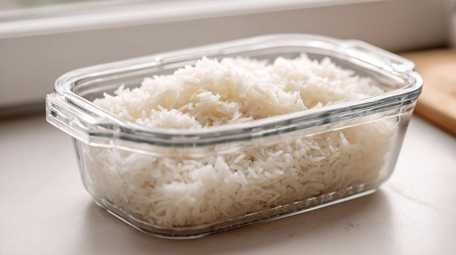
Transfer leftover rice into clean, shallow containers. This helps it cool faster and makes it easier to take out only what you need.
Do not leave the rice sitting out until it reaches room temperature. Divide it into portions and refrigerate it promptly.
3. Store Rice in the Refrigerator
Keep your refrigerator at 4°C or below.
Place the rice in clean, covered containers and refrigerate it as soon as possible after cooking.
A cautious approach is to use refrigerated cooked rice within 24 hours. If you know you will not eat it within that period, freezing it promptly is a better option.
Always label containers with the date so you can keep track of when the rice was prepared.
4. Freeze Cooked Rice for Later
Freezing is useful when you have prepared more rice than you can eat soon.
Divide the rice into meal-sized portions and place them in freezer-safe containers or bags. Label each portion with the date.
Keep your freezer at approximately -18°C. Frozen rice can retain its quality for an extended period, although its texture may change over time.
For the best results, freeze the rice promptly rather than leaving it in the refrigerator for several days first.
5. Reheat Rice Properly
When you are ready to eat refrigerated or frozen rice, reheat it until it is steaming hot throughout. If you have a food thermometer, aim for an internal temperature of 74°C.
For microwave reheating, add a small splash of water, cover the container loosely and heat the rice. Stir it halfway through so that it warms evenly.
Only reheat the portion you intend to eat. Avoid repeatedly cooling and reheating the same rice.
6. Do Not Depend on Smell Alone
Rice may look and smell normal even when it contains harmful bacteria or toxins.
If cooked rice has been left at room temperature for too long, discard it. Reheating cannot reliably make improperly stored rice safe because some toxins may survive heat.
When you are unsure how long the rice has been sitting out, it is safer not to eat it.
7. Turn Safely Stored Rice into Another Meal
Properly stored leftover rice can be used in several delicious ways.
Vegetable fried rice: Add vegetables and thoroughly cooked egg or another protein.
Rice with stew: Serve reheated rice with freshly prepared stew.
Quick egg rice: Stir-fry the rice with onions and egg for a simple meal.
Vegetable rice: Combine the rice with suitable vegetables and seasonings.
These ideas are suitable only when the rice was cooled and stored safely from the beginning.
Cooked Rice Final Thoughts
Knowing how to store cooked rice safely is an important kitchen skill. Divide leftovers into shallow containers, refrigerate them promptly, use them within a short period or freeze them, and reheat them thoroughly.
These simple habits can help your household reduce food waste without compromising food safety.
How do you usually store leftover rice at home? Share your kitchen tips with the 9jafoods community and help other readers make safer choices.