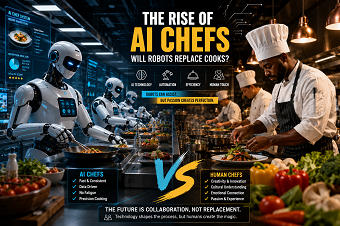
Rise of AI Chefs: Will Robots Replace Cooks?
The Rise of AI Chefs: Will Robots Replace Cooks?
Artificial Intelligence (AI) is transforming industries across the world, and the food industry is no exception. From smart ovens and robotic arms to AI-powered recipe generators and automated restaurants, technology is changing the way meals are prepared and served.
This rapid advancement raises an important question: Will AI chefs and robots eventually replace human cooks?
The answer is more complex than a simple yes or no. While AI can improve efficiency, consistency, and speed, cooking is still an art that depends on creativity, emotion, and human connection. Let’s explore how AI chefs are changing the future of food and whether traditional cooks should be worried.
What Is an AI Chefs?
An AI chef is a combination of artificial intelligence software and automated kitchen technology designed to help prepare food. Some AI systems simply recommend recipes, while others can control robotic arms, monitor cooking temperatures, and even prepare meals with minimal human involvement.
Modern AI chefs can:
- Suggest recipes based on available ingredients.
- Measure ingredients accurately.
- Monitor cooking temperatures.
- Reduce food waste.
- Adjust recipes for different dietary needs.
- Create personalized meal plans.
- Improve kitchen efficiency.
Although these systems are impressive, they still rely on data and programming rather than human intuition.
Robots Are Already Cooking
Around the world, restaurants are beginning to introduce robotic cooking systems. Some robots can flip burgers, fry chicken, prepare pizzas, brew coffee, or make salads without getting tired.
Unlike humans, robots can work long hours without breaks and produce consistent results every time.
For large restaurants and fast-food chains, this consistency is valuable because customers expect the same quality with every visit.
However, these robots are usually limited to repetitive tasks. They perform best in controlled environments where every step is carefully programmed.
AI Chefs: Why Restaurants Are Embracing AI
Restaurant owners face many challenges, including rising food costs, labor shortages, and customer expectations for fast service.
AI helps solve these problems by:
- Speeding up food preparation.
- Reducing human error.
- Managing inventory.
- Predicting customer demand.
- Reducing food waste.
- Improving order accuracy.
- Monitoring kitchen safety.
By analyzing customer preferences and sales data, AI can even recommend which dishes should remain on the menu and which ones should be removed.
This helps restaurants save money while improving customer satisfaction.
The Human Touch Still Matters
Despite these technological advances, cooking involves much more than following instructions.
Professional chefs rely on experience, creativity, and instinct.
A chef may decide to:
- Add more herbs.
- Adjust seasoning.
- Change cooking time.
- Improve food presentation.
- Experiment with new flavors.
These creative decisions cannot easily be programmed into machines.
Cooking is also deeply connected to culture and personal expression.
A family recipe often carries generations of history, something AI cannot truly understand.
Can AI Taste Food?
One of AI’s biggest limitations is that it cannot taste food the way humans do.
An experienced cook can instantly recognize if a soup needs more salt or if a stew should simmer longer.
AI predicts what should taste good based on recipes and data, but it cannot enjoy flavor, aroma, or texture.
Human taste remains essential for creating exceptional meals.
AI Chef: AI in Home Kitchens
AI is not only transforming restaurants. It is also becoming a valuable tool for home cooks.
Today’s AI-powered kitchen assistants can:
- Recommend meals using ingredients already in your refrigerator.
- Create weekly shopping lists.
- Suggest healthier alternatives.
- Calculate calories and nutrients.
- Guide beginners through recipes step by step.
Busy families can save time while preparing healthier meals.
Rather than replacing home cooks, AI makes cooking more convenient.
AI Chef: The Future of Nigerian Cooking
In Nigeria, food is an important part of culture, celebrations, and family life.
Popular dishes like:
- Jollof Rice
- Egusi Soup
- Afang Soup
- Pepper Soup
- Okra Soup
- Moi Moi
- Akara
- Suya
- Pounded Yam
require experience and personal judgment.
A Nigerian cook often knows exactly when palm oil has reached the perfect temperature or when pepper has blended properly into the stew.
These subtle skills are difficult for machines to master.
While AI can provide recipes and cooking instructions, the authentic taste often comes from years of practice.
AI as a Kitchen Assistant
Instead of replacing chefs, AI is increasingly becoming a helpful assistant.
Professional chefs now use AI to:
- Develop new recipes.
- Analyze nutrition.
- Reduce ingredient waste.
- Improve kitchen organization.
- Predict customer trends.
- Create personalized dining experiences.
This partnership allows chefs to focus on creativity while AI handles repetitive tasks.
The result is greater efficiency without sacrificing quality.
Jobs and the Future
Many people worry that robots will take away cooking jobs.
Although automation may reduce demand for certain repetitive kitchen roles, it is also creating new opportunities.
Restaurants now need professionals who can:
- Maintain robotic equipment.
- Program AI systems.
- Analyze food data.
- Design automated kitchens.
- Combine culinary arts with technology.
The future kitchen may include both chefs and technology specialists working together.
What AI Cannot Replace
Even the most advanced robot cannot recreate certain human qualities.
AI cannot replace:
- Passion.
- Creativity.
- Family traditions.
- Cultural knowledge.
- Hospitality.
- Emotional connection.
- Personal storytelling.
When people visit restaurants, they often remember not just the food but also the warmth, personality, and care provided by the chefs and staff.
These experiences remain uniquely human.
The Future of Food
Experts believe the future of cooking will combine human talent with artificial intelligence.
Imagine a kitchen where:
- AI monitors food safety.
- Smart ovens cook meals perfectly.
- Robots perform repetitive tasks.
- Human chefs create new flavors.
- Customers receive personalized meal recommendations.
Instead of competing, humans and AI will likely work together to produce better dining experiences.
AI Chefs: Final Verdict
So, will robots replace cooks?
AI chefs are transforming kitchens by making cooking faster, safer, and more efficient. They are excellent at handling repetitive tasks, managing data, and improving consistency.
However, cooking is much more than following recipes. It is an expression of culture, creativity, passion, and love—qualities that machines cannot truly replicate.
The future belongs not to robots alone, but to collaboration between technology and human expertise. AI will continue to support chefs, restaurants, and home cooks, making food preparation smarter and more efficient.