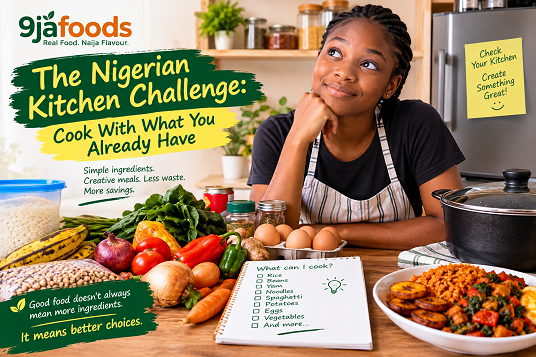
The Nigerian Kitchen Challenge
The Nigerian Kitchen Challenge: What Can You Cook With What You Already Have?
There is a particular moment that happens in many Nigerian homes.
- You open the kitchen cupboard.
- You check the freezer.
- You look inside the rice container.
Then you stand there wondering:
“What exactly can I cook with all these things?”
It is easy to think that preparing a good Nigerian meal requires a long shopping list. Rice needs stew. Beans needs plantain. Noodles need eggs. Soup needs several ingredients. Before you know it, you are reaching for your phone to order food.
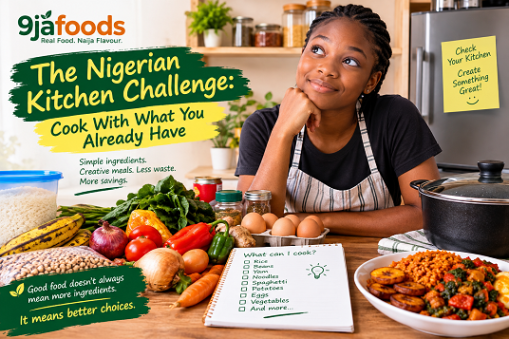
But sometimes, the ingredients for a decent meal are already sitting quietly in your kitchen.
You just need to look at them differently.
Welcome to the Nigerian Kitchen Challenge: before buying more food, challenge yourself to create a meal from what you already have.
The Nigerian Kitchen Challenge: Start With Your Main Ingredient
The easiest way to begin is to find your main carbohydrate or staple.
- Do you have rice?
- Beans?
- Yam?
- Garri?
- Noodles?
- Spaghetti?
- Potatoes?
- Even bread can become part of a proper meal.
Once you identify the main ingredient, the next question is:
“What can I combine with this?”
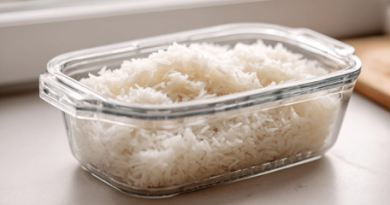
For example, leftover rice does not automatically mean you have to eat yesterday’s meal again.
With a few vegetables, an egg and some seasoning, it can become fried rice-style leftover rice.
Beans can become porridge.
Boiled yam can be paired with egg sauce.
Potatoes can become a simple potato-and-egg meal.
The trick is not necessarily having more food. It is learning how to combine what you already have.
The Nigerian Kitchen Challenge: Your Refrigerator May Be Hiding Dinner
Before going shopping, take a proper look inside your refrigerator.
That half bunch of ugu?
Use it.
The two carrots nobody has touched?
Use them.
The remaining spring onions?
Add them to something.
One tomato?
It can still contribute to a sauce.
A small quantity of vegetables may not look impressive individually, but several small ingredients can become one useful meal.
This is particularly helpful for households where food gets forgotten at the back of the fridge until it spoils.
Instead of asking, “What meal do I want?”, try asking:
“What ingredients need to be used first?”
That small change can save food and reduce waste.
The Nigerian Kitchen Challenge: The One-Pot Advantage
When you are cooking with limited ingredients, one-pot meals can be your best friend.
Nigerian cooking already has plenty of examples.
Think of:
- Jollof rice
- Beans porridge
- Yam porridge
- Vegetable rice
- Spaghetti with tomato sauce
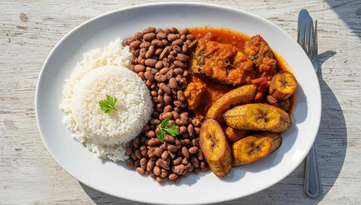
- Rice and beans
- Potato and vegetable meals
One-pot cooking can also reduce the number of utensils you need to wash afterwards.
For students and busy young people, that is another advantage.
Imagine coming home hungry and discovering that you can make a complete meal using one pot instead of preparing three different dishes.
Sometimes simplicity is the real kitchen hack.
The Nigerian Kitchen Challenge: Don’t Underestimate Eggs
Eggs deserve their own section because they can rescue a surprisingly large number of meals.
Have rice but no stew?
Make egg sauce.
Have noodles?
Add egg and vegetables.
Have boiled yam?
Serve it with scrambled or fried eggs.
Have bread?
Make an egg sandwich.
Have potatoes?
Turn them into a potato-and-egg skillet.
Eggs can add protein and make a simple meal feel more complete.
However, the goal is not to add eggs to absolutely everything. The point is to understand how one available ingredient can create several different meal possibilities.
The Nigerian “Mix and Match” Method
Here is a simple method you can try whenever you don’t know what to cook.
Step 1: Find your staple
Choose your rice, yam, beans, pasta, potatoes, noodles or another available base.
Step 2: Find your protein
Check whether you have eggs, fish, chicken, beans, crayfish or another protein source.
Step 3: Find your vegetables
Look for tomatoes, onions, peppers, carrots, green vegetables, cabbage or whatever is available.
Step 4: Check your seasoning
Stock cubes, curry powder, thyme, pepper, garlic, ginger and other seasonings can change the character of a simple meal.
Step 5: Choose your cooking method
Will you boil it?
Fry it?
Make it into a sauce?
Cook everything together?
Once you start thinking this way, the kitchen becomes less about following one recipe and more about solving a little food puzzle.
The Nigerian Kitchen Challenge: Three Meals From Similar Ingredients
Imagine you have:
Rice + eggs + tomatoes + onions + pepper.
You could prepare:
Meal 1: Tomato egg sauce with rice
Cook the tomato, onion and pepper mixture, then add beaten eggs.
Meal 2: Simple fried rice-style rice
Stir-fry the rice with chopped vegetables and seasonings, then add egg.
Meal 3: Spicy egg rice
Cook rice with a pepper and tomato base, then finish with scrambled egg.
The ingredients have not changed dramatically.
The preparation has.
That is the real lesson.
Don’t Turn Creativity Into Waste
There is one important rule, though:
Use what is available, but don’t compromise food safety.
Not every leftover should be transformed into another meal.
Food that smells strange, has visible mould, has been stored improperly or has clearly spoiled should not be used simply because you don’t want to waste it.
Food-saving is about preventing unnecessary waste before it happens.
That means buying realistic quantities, storing food properly and using ingredients before they spoil.
The ₦0 Shopping Challenge
Here’s a challenge for Nigerian households, students and young cooks.
Before your next trip to the market or supermarket, spend one day doing a ₦0 food shop.
The rule is simple:
You cannot buy new ingredients.
You can only cook with what is already available in your kitchen.
Open the cupboard.
Check the fridge.
Look in the freezer.
Write down everything you find.
Then create a meal.
You might be surprised by what you discover.
Perhaps that forgotten pack of spaghetti can become dinner.
- Maybe the beans you planned to cook next week can become today’s meal.
- Maybe the remaining vegetables can become a sauce.
- Maybe the ripe bananas need to be eaten before they become waste.
This challenge is not about pretending food prices do not matter. Nigerians know very well that feeding a household has become a serious financial consideration.
It is about making the food you already paid for work harder for you.
A New Way to Think About Nigerian Food
Food creativity does not always mean creating an expensive or complicated recipe.
Sometimes it means looking at ordinary ingredients with fresh eyes.
Rice can become several different meals.
Beans can be prepared in different ways.
Yam can move from breakfast to dinner.
Vegetables can transform simple staples.
And leftovers can sometimes become the foundation for something completely different.
The next time you open your kitchen cupboard and think, “There is nothing to cook,” pause for a moment.
Look again.
You may not have nothing.
You may simply have not discovered the meal yet.
The Nigerian Kitchen Challenge: The 9jafoods Kitchen Question
If you were given only the ingredients currently in your kitchen, what meal could you create without buying anything else?
That might just be your next great Nigerian food challenge.
The best kitchen isn’t always the one with the most ingredients. Sometimes, it’s the one where you know how to make the most of what you have.