A Journey Through Indian and African Fruits: Nature’s Gifts
A Journey Through Indian and African Fruits: Nature’s Colourful Gifts
Fruits do more than satisfy hunger; they carry culture, memory, medicine, geography, and identity in their skins. India and Africa beautifully illustrate this truth—lands where fruits flourish under sunlit skies and shape diets, rituals, and livelihoods.
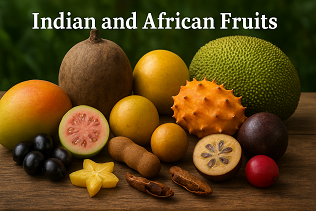
From India’s sweet mangoes to Africa’s tangy baobab, these fruits reveal how people survive, heal, and celebrate through natural resources.
Indian Fruits: Colour, Aroma, and Cultural Soul
India thrives as a fruit paradise stretching across mountains, plains, deserts, and coasts. Its diverse climates nurture endless fruit varieties—some celebrated globally and others tucked within small markets or backyard gardens.
The Mango (Aam): India’s Pride
Indians celebrate mango as the king of fruits. Thousands of varieties grow across the country—Langra, Kesar, Alphonso, Dasheri, Totapuri and more—each offering its own aroma and flavour. People eat mangoes fresh, juice them, pickle them, dry them, and turn them into dessert and festival treats. Mango trees also appear in folklore and hospitality, turning summer into a season of joy.
Guava (Amrood): Humble but Beloved
Although guava originated in the Americas, India embraced it with enthusiasm. Its crisp flesh, vitamin-rich content, and tangy sweetness make it a favourite—especially when street vendors serve it with salt and chilli. Families also rely on its leaves for traditional remedies that support digestion and cleansing.
Banana: The Everyday Fruit of India
Bananas perform multiple roles in Indian life—snack, sweetener, ceremonial offering, and even eco-friendly plate when people use banana leaves. Varieties range from tiny yellow bananas to plantains and red bananas. Households fry them as chips, steam them for meals, and blend them into sweets.
Jackfruit (Kathal): Versatile Giant
Jackfruit ranks as the world’s largest tree-borne fruit, and India showcases its versatility. Ripe jackfruit delivers juicy, golden bulbs with a honey-like aroma. Cooks chop its unripe flesh into curries, stir-fries, and biryanis. Although the world now celebrates jackfruit as vegan meat, India mastered this transformation long before it became trendy.
Bael (Wood Apple): Ancient Nourisher
People crack bael’s hard shell to make cooling sherbet and medicinal mixtures. Ayurvedic experts value bael for improving digestion, purifying the body, and soothing internal heat.
Jamun (Black Plum): Summer’s Purple Jewel
Jamun arrives briefly during summer, offering a burst of sweet-acidic flavour. Its phytonutrients help regulate blood sugar, so many Indians treat it as both a delicacy and a functional food.
India’s Less Familiar Fruits: Local Wonders
India’s biodiversity shines in lesser-known treasures:
- Jungli Jalebi: This spiralled fruit resembles the sweet jalebi but offers a natural tang.
- Carambola (Star Fruit/Kamrak): When sliced, its star shape adds beauty to salads and juices.
- Karonda (Carandas Cherry): Its tart taste makes it perfect for chutneys, pickles, and preserves.
These fruits remind India that food extends beyond supermarket shelves into forests, farms, and folklore.
African Fruits: Heritage, Nutrition, and Identity
Africa’s landscapes—from rainforests to savannahs—yield fruits deeply tied to survival, healing, and symbolism. Many varieties remain unknown to global grocery stores, yet they hold nutrients and ancient knowledge.
Baobab: The Superfruit of the “Upside-Down Tree”
Baobab trees stretch their root-like branches upward, earning the nickname “upside-down tree.” Their fruit contains naturally dried pulp rich in vitamin C, fibre, and antioxidants. Families mix baobab into drinks, porridges, and herbal remedies. The world now calls it a superfood, although Africans valued it long before science caught up.
Marula: A Fruit for People, Wildlife, and Celebration
Marula fruits fall and ripen on Southern African soil where both elephants and humans enjoy them. People ferment its juice to make the famous Amarula liqueur, while beauty enthusiasts prize marula seed oil for skin and hair moisture.
Ackee: A Wanderer from Africa to the Caribbean
Although Jamaica claims ackee as its national fruit, its story began in West Africa. Nigerians, Ghanaians, and other West Africans cook and eat ackee—stewed, boiled, or blended into meals. Its journey across the Atlantic reflects the movement of culture and food.
African Star Apple (Udara/Agbalumo): Childhood Memory in a Fruit
Known by different names across West Africa, this fruit delivers a sweet-sour taste and chewy texture. Children eagerly anticipate its season, turning agbalumo into a symbol of nostalgia and community storytelling. When sliced, its core forms a star—true to its name.
Kiwano (Horned Melon): African Art in Fruit Form
This striking orange-spiked fruit opens to reveal bright green, jelly-like flesh. Its flavour hints at banana, cucumber, and kiwi. Today, people cultivate kiwano worldwide, though Africa remains its ancestral home.
Tamarind (Imli): A Shared Ingredient Across Continents
Tamarind links Africa and India—it thrives in both lands and flavours countless meals. Its sticky, sour pulp enriches sauces, soups, snacks, drinks, and herbal medicine.
Other Rare African Fruits Worth Knowing
Africa’s botanical wealth stretches further:
- Sausage Tree Fruit (Kigelia africana): Its giant, hanging “sausages” support ointments and herbal treatments.
- Wild Custard Apple/Soursop: These creamy fruits flourish in tropical belts and soothe palates.
- Monkey Orange: People crack its hard shell to enjoy the sweet flesh or juice it in Southern Africa.
These fruits highlight Africa’s ecological richness and deep indigenous knowledge.
Fruits as Cultural Symbols
Across India and Africa, fruits enrich spirituality, celebration, medicine, and shared memory.
In India:
- People hang mango leaves over doorways during ceremonies to welcome prosperity.
- Banana trees symbolize fertility and abundance.
- Jackfruit harvests spark festive feasting.
In Africa:
- Baobab trees stand as gathering spots and resilient icons.
- Marula fruit inspires rituals, folklore, and communal celebration.
- Agbalumo evokes stories of childhood, school days, and shared pleasure.
Thus, fruits nourish not only bodies but also emotions, relationships, and identity.
Conclusion: Connecting Two Fruit Kingdoms
From lively Indian orchards to African plains, fruits act as living encyclopedias of nature. They tell stories of climate, culture, migration, and adaptation. Whether tangy baobab or sweet mango, each fruit carries a legacy—a reminder that nature feeds body and spirit alike.
Exploring fruits of India and Africa becomes more than a list; it becomes a journey through time, taste, belonging, and biodiversity.
These natural gifts unite communities across continents and prove that despite different landscapes, harration