Round Fruits List (Full Guide)
Round Fruits List (Full Guide)
Round fruits hold a special place in many cultures, especially during New Year celebrations. In traditional Chinese Feng Shui, circular shapes represent wholeness, completeness, wealth, and continuity. Because of this symbolism, round fruits are believed to attract good fortune, financial blessings, and positive energy for the year ahead.
This belief strongly influences Filipino New Year traditions, where families prepare 12 round fruits, each one representing a month of prosperity in the coming year. Some families even go beyond 12, displaying as many round fruits as possible to amplify abundance. Whether you follow this tradition for cultural reasons, spiritual meaning, or personal preference, the shape and sweetness of the fruits matter.
Round fruits used for celebrations usually have:
- a smooth or shiny exterior
- a pleasant or sweet taste
- a symbolic circular shape representing endless blessings
This explains why sour options like lemons and limes—though round—are rarely used. They may not carry the sweetness or positive symbolism required for the ritual.
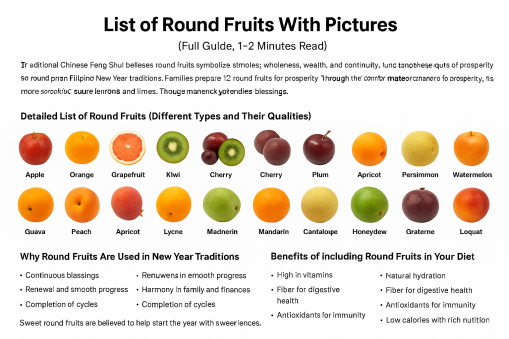
Detailed List of Round Fruits (Different Types and Their Qualities)
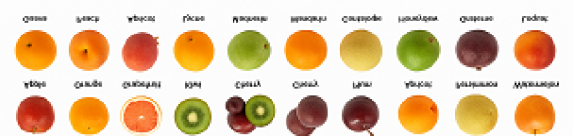
Below is an expanded list of round fruit you can use for New Year celebrations, fruit baskets, or general healthy eating. This diverse collection gives you plenty of options to choose from, regardless of your location or preferences.
1. Apple
A classic round fruit known for its crisp texture and subtle sweetness. Apples come in many varieties, each offering different flavors and colors.
2. Orange
Bright, juicy, and symbolically golden, oranges represent wealth and good energy in many Asian cultures.
3. Grapefruit
Larger and slightly more bitter than oranges, but still round, refreshing, and nutrient-rich.
4. Kiwi
Small, fuzzy, and oval-round, kiwis have a deliciously tart-sweet taste.
5. Cherry
Tiny round fruits packed with flavor. Their bold red color symbolizes luck and happiness.
6. Plum
Soft, round, and juicy with smooth skin and a sweet-tart flavor.
7. Peach
Round, fragrant, and sweet. Peaches symbolize longevity and good relationships.
8. Apricot
Soft, velvety skin with a mild sweetness. Perfect for fruit platters.
9. Passionfruit
Round and filled with aromatic pulp. Its rich sweetness makes it stand out.
10. Pomegranate
A round fruit representing fertility, abundance, and blessing—especially in Middle Eastern culture.
11. Guava
Fragrant and round with a crunchy or soft interior, depending on the variety.
12. Pear
Though slightly elongated, many pears have a rounded base that fits into this tradition.
13. Lychee
Small, round, and sweet with a floral flavor.
14. Fig
A soft, round fruit filled with tiny edible seeds and natural sweetness.
15. Persimmon
Perfectly round and bright orange, symbolizing good luck and positivity.
16. Mandarin
A smaller, easy-peel cousin of the orange, commonly used during Asian New Year feasts.
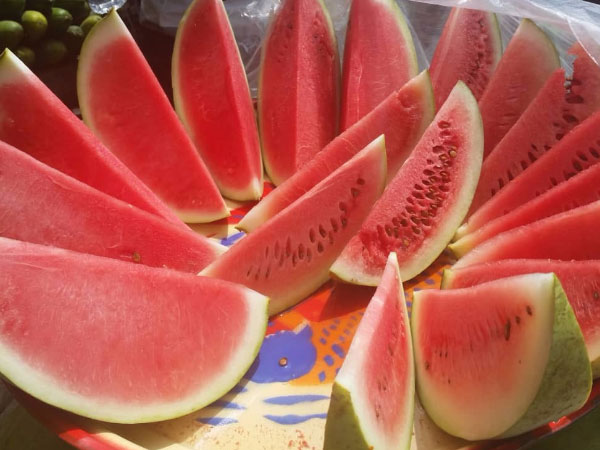
17. Watermelon
Large and spherical, watermelons represent abundance on a grand scale.
18. Cantaloupe
Round, sweet melon with a distinctive net-like skin.
19. Honeydew Melon
Smooth, round melon with a cool, sweet taste.
20. Grape
Small, round, and juicy. Many cultures eat 12 grapes at midnight for good luck.
21. Blueberry
Tiny, round antioxidant-rich berries with a mild sweetness.
22. Cranberry
Bright red, tart berries often used in celebrations and festive dishes.
23. Mangosteen
A tropical purple fruit with a sweet, creamy inside. Round and symbolic of luxury.
24. Nectarine
Similar to peaches but with smooth skin. Sweet, round, and vibrant.
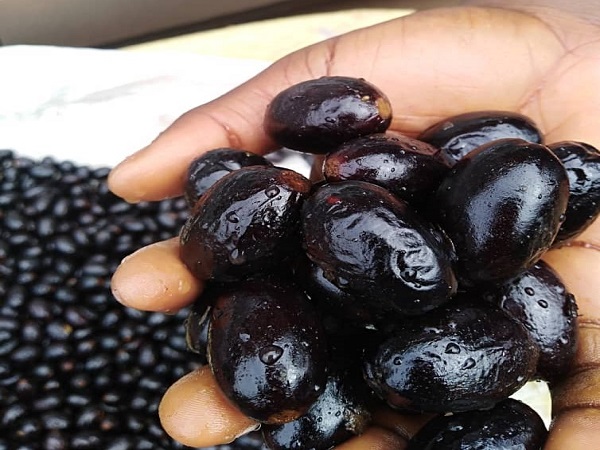
25. Star Apple
A juicy West African and Caribbean fruit with a smooth round exterior.
26. Feijoa
Small, round, and fragrant, with a unique pineapple-guava taste.
27. Longan
Translucent, juicy fruit with a sweet, grape-like flavor.
28. Loquat
A small, round, golden-orange fruit with a sweet and slightly tangy taste.
Why Round Fruits Are Used in New Year Traditions
The round shape symbolizes:
- Continuous blessings
- Renewal and smooth progress
- Harmony in family and finances
- Completion of cycles
Additionally, sweet round fruits are believed to help you start the year with sweet experiences rather than sour or bitter ones. This is why fruits like lemons and limes, despite being round, are excluded.
Benefits of Including Round Fruits in Your Diet
Beyond cultural rituals, round fruits offer:
- High vitamin content (especially vitamin C)
- Natural hydration
- Fiber for digestive health
- Antioxidants for immunity
- Low calories with rich nutrition
They are excellent for snacking, juicing, salads, festive spreads, and decoration.