Nigerian Food Storage Tips: Ways to Keep Your Food Fresh
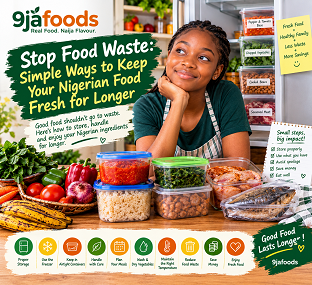
Nigerian Food Storage Tips: Simple Ways to Keep Your Nigerian Food Fresh for Longer

There is a strange kind of heartbreak in the kitchen.
You buy tomatoes on Saturday. By Wednesday, some are already soft.
You buy vegetables for soup. A few days later, they are looking tired in the corner of the refrigerator.
You buy bananas. Suddenly, everyone in the house has decided they are not interested in bananas anymore.
Then comes the familiar question:
“Should we still use this?”
Food waste is not always caused by buying too much. Sometimes, it happens because we don’t know how to store what we buy.
In Nigerian kitchens, where fresh tomatoes, peppers, leafy vegetables, plantains, fruits, fish and other ingredients are part of everyday cooking, simple storage habits can make a surprising difference.
And no, you don’t need an expensive smart refrigerator.
Sometimes, the solution is simply knowing where and how to keep your food.
Nigerian Food Storage Tips: Your Fridge Is Not a Magic Box
Putting something inside the refrigerator does not automatically make it last forever.
Different foods have different storage needs.
Some vegetables prefer refrigeration. Others can become damaged by excessive cold.
Some foods need to be kept dry.
Others need airtight containers.
Cooked food needs proper cooling and storage.
The first rule of food storage is therefore simple:
Know what you are storing before deciding where to store it.
The Tomato Problem
Few ingredients are more important in Nigerian cooking than tomatoes.
They can become stew, jollof rice, sauce, soup and countless other meals.
However, buying a large quantity because tomatoes are cheaper that day can backfire if your household cannot use them before they spoil.
If you have ripe tomatoes that need to be used quickly, make them part of your next meal instead of allowing them to sit forgotten.
Tomatoes can also be processed into a cooked sauce or base and stored appropriately for later use.
The idea is simple:
Don’t wait until food is almost spoiled before deciding what to do with it.
Nigerian Food Storage Tips: Give Your Leafy Vegetables Some Attention
Ugu, spinach, waterleaf and other leafy vegetables can lose their freshness quickly.
One common mistake is washing everything and then storing wet vegetables in a tightly closed container.
Excess moisture can encourage deterioration.
Depending on the vegetable, gently removing excess moisture and using suitable breathable or lined storage can help maintain quality.
Also, don’t buy more leafy vegetables than your household is realistically going to use.
Sometimes the cheapest basket at the market becomes the most expensive purchase when half of it ends up in the rubbish.
What About Plantain?
Plantain is another Nigerian kitchen favourite that changes dramatically depending on how you store and use it.
Green plantains can gradually ripen at room temperature.
If several plantains begin ripening at the same time, don’t panic.
You have options.
You can fry them.
Boil them.
Make porridge.
Serve them with eggs.
Add them to another meal.
The important thing is to notice the stage of ripeness instead of waiting until the fruit becomes too soft to use.
And those very ripe plantains?
They can still become something delicious.
That is where creativity comes in.
Nigerian Food Storage Tips: Your Freezer Can Be Your Best Friend
The freezer is one of the most useful tools for reducing food waste.
Fish, meat and some prepared foods can be portioned and frozen appropriately.
Instead of freezing a huge quantity together, divide food into meal-sized portions.
Why?
Because nobody wants to defrost two kilograms of chicken when they only need enough for dinner.
Smaller portions are easier to manage.
They also make it easier to know exactly what you have.
A freezer can save money, but only if you remember what is inside it.
Label That Container!
There is a funny thing that happens in Nigerian freezers.
You put something inside.
You promise yourself you’ll remember what it is.
Three weeks later:
“Is this stew or soup?”
Label your containers.
You don’t need fancy labels.
A piece of masking tape and a marker can do the job.
Write:
Beans — Monday
Stew — Tuesday
Chicken — date
This small habit can prevent food from becoming a mysterious frozen object nobody wants to touch.

Don’t Ignore Your Dry Foods
Food storage isn’t only about refrigerators and freezers.
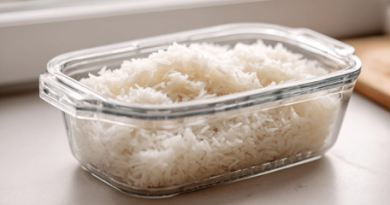
Rice, beans, garri, flour, semolina and other dry foods also need proper storage.
Keep them in clean, dry containers that protect them from moisture and pests.
Transparent containers can be particularly useful because you can see how much food remains.
That can also help when planning your next shopping trip.
Instead of discovering that your rice is almost finished after returning from the market, you can see what needs replacing before you leave home.
Nigerian Food Storage Tips: The “Eat Me First” Basket
Here’s an idea that more Nigerian households could try.
Create an “Eat Me First” section in your refrigerator.
Whenever you have food or produce that needs to be used soon, put it there.
Maybe it’s:
- ripe tomatoes;
- nearly ripe bananas;
- leftover vegetables;
- cooked food approaching its recommended storage period;
- an opened container that needs attention.
Then, whenever someone asks, “What should I cook?”, check the basket first.
You are turning food that might have become waste into your next meal.
The One-Ingredient Rescue
Sometimes you don’t need a complicated recipe.
You simply need to rescue one ingredient.
Have vegetables that need to be used?
Make vegetable sauce.
Have ripe plantain?
Make a plantain-based meal.
Have cooked beans?
Pair them with another staple.
Have leftover rice?
Transform it into another rice dish.
Have several small vegetables?
Combine them into a colourful stir-fry or sauce.
This is one of the most exciting things about Nigerian cooking:
A few ordinary ingredients can become something completely different.
Nigerian Food Storage Tips: Buy for Your Real Household
Food shopping can sometimes become a competition.
You see a good price and think:
“Let me buy plenty.”
But ask yourself one question first:
“Will we actually eat all of this?”
Buying five bunches of vegetables when your household only needs two is not necessarily a bargain.
Buying a large quantity of fruit that nobody likes is not saving money.
The cheapest food is not always the food with the lowest price tag.
Sometimes, the real saving comes from buying exactly what you can use.
Nigerian Food Storage Tips: Food Waste Is Also Money Waste
- Every tomato thrown away represents money that was spent and never enjoyed.
- Every forgotten container of stew is money sitting in the freezer.
- Every spoiled vegetable is another item that has to be purchased again.
That is why reducing food waste isn’t just an environmental issue.
It is also a household budgeting habit.
When you store food properly, plan meals and use ingredients before they spoil, you are making better use of the money already spent on food.
Try the 7-Day Food Rescue Challenge
Here’s a challenge for 9jafoods readers.
For the next seven days:
- Day 1: Check your refrigerator.
- Day 2: Identify three foods that need to be used soon.
- Day 3: Check your dry-food containers.
- Day 4: Organise your freezer.
- Day 5: Label anything you are likely to forget.
- Day 6: Create a meal using an ingredient that might otherwise go to waste.
- Day 7: Look at what you successfully saved.
You may discover that your kitchen contains more possibilities than you realised.
Nigerian Food Storage Tips: The 9jafoods Takeaway
A good kitchen isn’t necessarily one filled with expensive appliances or overflowing cupboards.
It is a kitchen where food is bought thoughtfully, stored properly and enjoyed before it becomes waste.
So the next time you open your refrigerator and find a lonely tomato, a bunch of tired vegetables or some forgotten leftovers, don’t immediately reach for the bin.
Pause.
Think.
Because sometimes, the difference between food and food waste is simply what we do next.